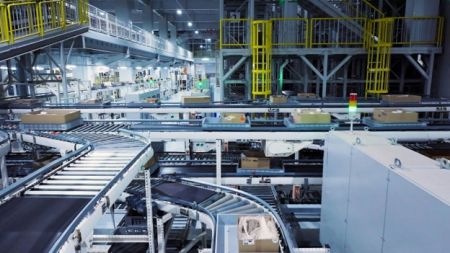





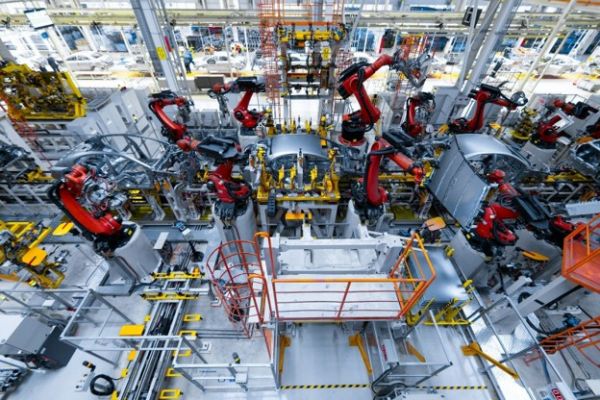
Most modern factories are rivalling clockwork in the way they run, and if you’ve ever wondered how, you can thank industrial automation. More specifically, you can thank something called a ‘PLC’.
PLC stands for Programmable Logic Controller, and it’s one of the most vital aspects of industrial automation across the entire chain. Essentially, it’s the brains behind most automated systems. PLCs are what keep everything running efficiently, safely, and on schedule. They’re everywhere, from robotic arms in car assembly plants to conveyor belts for sorting produce.
This guide is all about getting the fundamentals of the PLC’s contribution to industrial automation down. We’ll unpack what PLCs are, how they work, and why they’ve become such an essential part of so many modern industries.
What exactly is a PLC?
Back in 1968, the PLC was invented as a solution to automation problems in the United States automotive industry. It was designed to replay relay logic systems, but has since evolved well beyond its humble (if transformative) roots.
A PLC – or Programmable Logic Controller – is a staple in industrial automation. You’ll know it as a small but powerful computer that manages inputs and outputs, using that information to control machines and processes across an automated line. Unlike your everyday laptop, phone, or computer, PLCs are built for the industrial environment. In other words, they’re tough. They can withstand vibration, dust, temperature changes, and even electrical noise, all while running 24/7 without missing a beat.
Think of these as your line’s nervous system. Working in tandem, they can’t shut off while the line is running. Any PLC takes in information from sensors or inputs provided by the peripheral technology on the line, and processes that information according to a program. That program is written by an engineer or technician, coded to send commands to the outputs (think motors, valves, or lights).
Think of it like this:
- A sensor tells the PLC, “The conveyor belt is full.”
- The PLC’s program says, “If the belt is full, stop the motor.”
- The PLC then tells the motor to stop.
That’s essentially industrial automation via a PLC in a nutshell, though it’s more complex the deeper you dig. So, why don’t we dig a little bit deeper?
How PLCs fit into industrial automation:
In modern industrial automation, across food and beverage, manufacturing, and practically every other industry, PLCs act as control centres. They’re the nerves linking every moving part of a system together.
Let’s take a bottling plant as an example. Sensors track how many bottles move along the line. A PLC ensures that the right amount of liquid is poured into each one, triggers capping machines at the exact right moment, and stops the conveyor if something jams. All of this happens faster (and more precisely) than a human could manage alone.
PLCs deliver unparalleled consistency and precision while significantly reducing manual labour and human error. This is one of the best ways to scale, which is why they have become such a cornerstone of what we now call smart manufacturing.
Let’s take a closer look at PLCs:
Every PLC system is customised for its environment; that’s simply the purpose of a PLC. That said, they all follow the same basic logic cycle:
- Input. The PLC gathers sensor data, switches, and measurement devices embedded in the line. At this stage, important data includes temperature, speed, pressure, and position.
- Processing. The PLC runs that data through a pre-programmed set of instructions, often written in what’s known as ladder logic or function block diagram.
- Output. Finally, the PLC sends signals based on those instructions to actuators, such as motors, valves, or alarms, to make things happen.
This three-stage loop occurs in milliseconds, over and over, creating a continuous, reliable flow of communication that keeps the entire production system functioning with very little human input. That’s the core goal of industrial automation, and a big reason why PLCs are still the gold standard.
Now, while it’s easy to think of industrial automation like this as purely physical, functioning PLCs ultimately make it safer and faster for the humans who work the line. By allowing PLCs to interface with the management of repetitive or dangerous tasks, humans can focus on problem-solving, optimisation, and system improvement.
To look at a PLC, you might not think much of it. It’s often just a small grey box mounted in a control cabinet. But inside that grey box lie the secrets of modern industrial automation.
These little boxes ingest thousands of data points, make decisions in a fraction of a second, and keep entire systems running smoothly. Without them, industries would collapse. That’s a lot for one little component’s shoulders. But don’t worry: it can handle it.
Partner with CNC Design to facilitate your industrial automation.
We are CNC Design, your world-class automation partner based in New Zealand. We supply, install, and upgrade parts for industrial manufacturing in a variety of verticals.
Ready to upgrade your system? Get in touch with us to review how world-class automation technology, expertise, and support could revolutionise your production line.