




If you are involved in the manufacturing, food and beverage, or energy industry, then you’re well aware of what a significant cost energy represents in the industrial environment. Across Aotearoa and the world at large, industry is evolving rapidly, which means operators need to focus on emerging technology to keep up.
There’s a lot to think about here. Higher electricity prices, tighter sustainability targets, and the reality of ageing equipment make one thing very clear: finding new ways to use energy more efficiently is vital.
But what does that look like in the context of industrial automation? Moreover, where do we start when we’re dealing with complex production lines, legacy machines, and extremely tight operating margins?
As industrial automation specialists, we’ve had this problem on our radar for quite a while. Read on as we unpack how modern factories and production lines can deliver real, measurable gains and reduce environmental impact (without compromising output).
Understand how your energy is being used.
You can almost characterise an industrial site by a proliferation of energy-hungry equipment. Motors, heaters, pumps, compressors, conveyor systems; all of these are pulling power in different ways, at different times, likely with differing levels of efficiency.
The first step in improving your facility’s energy performance is understanding where your energy is currently going. For so many plants, energy usage hasn’t been meaningfully measured or reviewed in years (going on decades). This doesn’t feel impactful at the time, but the lack of oversight means inefficiencies get baked into everyday operations. And then, those choices are taken for granted, when they could be the very things that revolutionise how much power you are using.
This is where energy audits and energy monitoring tools can really change the game. Observe energy usage, and once you can see patterns, you can begin to make informed decisions. Identifying issues such as motors running while idle, compressors cycling too often, or heating or cooling systems fighting stubborn ambient temperatures presents opportunities to either optimise the surrounding environment or reduce usage altogether.
Consider upgrading your motors and drives.
Across the board, electric motors account for a large share of industrial energy use, which suggests the same is likely true for your facility (especially if it’s on the older side). Due to slow evolution, many older facilities still run oversized, poorly matched, or simply outdated motors.
Compared to older models, modern high-efficiency motors with variable speed drives (VSDs) only draw the energy they need at any given moment, rather than blasting along at full speed regardless of demand.
Replacing your motors and drives is one of the most immediate ways to cut energy waste without modifying the process itself. And because VSDs give you better control, you get a longer equipment life as a bonus.
Apply industrial automation to reduce energy use.
Systems controlled by PLCs or SCADA platforms fine-tune production to the point where you start to see actual energy gains. Careful work can reduce overruns, cut idle time, and ensure machines draw power only when required.
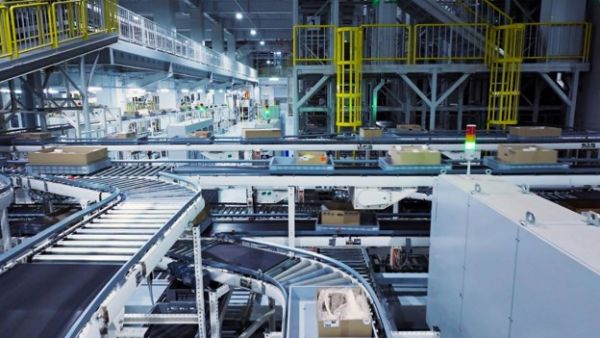
Let’s take a simple example: a conveyor line that stops automatically when the bottleneck downstream is full. Without industrial automation, that conveyor might run all day, drawing power while moving nothing. With a PLC, that line immediately becomes responsive and switches on or off accordingly. Are those micro-adjustments that don’t feel impactful day-to-day? Yes. But as with any small change, the returns add up quickly.
So yes, industrial automation reduces labour. But it also reduces waste, time, error, and now, energy use.
Prioritise maintenance to save on energy costs.
Great maintenance is often a mechanism for energy efficiency in disguise.
It’s oddly simple. A poorly lubricated drive chain works harder, a clogged filter forces the system to strain, and a misaligned conveyor wastes power through friction. These are small inefficiencies, but they accumulate slowly, making it hard to notice (and expensive to ignore).
Predictive maintenance, condition monitoring, and regular equipment checks: these are the most important tools in your arsenal if you’re looking to keep your energy usage in line. Not to mention, putting your maintenance routine in order is one of the most reliable ways to reduce waste in the long term.
Ultimately, there are always opportunities to improve energy efficiency in industry. You might be in the energy industry, food and beverage, or manufacturing; whatever your specialty, these tips can help minimise the energy your factory uses (and save you money along the way).
Optimise your energy use with world-class industrial automation.
At CNC Design, we work with clients across New Zealand in industries ranging from energy to machine building, food and beverage production to general manufacturing.
We specialise in improving performance by supplying energy-efficient components and integrating industrial automation technologies. If you are looking to bring your plant in line with modern energy practices, get in touch with us today.