





Siemens Sinamics servo drives and their associated servo motors are the undisputed champions of motion control. Siemens has the widest torque/power range of servo motors on the market, from baby wee sub kW servo motors (0.05kW) to 195kW behemoths. All of these servo motors are permanent magnet AC Synchronous servo motors.
These servo motors have their rotors spun by three different ranges of Siemens servo drives.
From the full featured, common DC bus S220, which moves the highest performing production machinery and machine tools in the world, to the S210 servo drive – almost the match of the S220 dynamically, but is in an individual drive format. To the cheap and cheerful S200, for those who want the quality and integrability of Siemens via the Totally Integrated Automation (TIA) portal, but at a lower price point.
All of the below drives are Siemens ‘Next Generation’ drives, featuring PLe safety for each of their safety functions, and are engineered to minimise their carbon footprint both during manufacturing, and over their lifetime. Each includes an Environmental Product Declaration to ISO 14021 for those who want full environmental impact traceability.
All of these drives have Profinet onboard, to connect to high level control. But like many Siemens drives, the S220 and S210 also support ethernet/IP, for those Rockwell PLC lovers out there!
Let CNC Design help you select the right High-Performance drive technology for your application.
Sinamics S220
The Sinamics S220 is the successor to the mighty and long lived S120. The S120 had a great run of 20 years, but had reached the extent of its upgradability. The S220 is a totally new package, new electronics/processors, next generation firmware, and significantly upgraded thermal capacity – packing more kW into narrower drives in many cases.
This new firmware and faster internal chip sets means that the S220 has the full range of safety functions all rated to PLe as per ISO13849-1 standard. Explicitly this is the basic safety functions such as STO or SS1, plus the full range of dynamic safety functions such as Safe Operating Stop and Safe Slow Speed. Full list below.
The S220’s controller is the CU320-3. This processor can handle approximately twice the number of drives as the S120 predecessor, so between 8 and 12 drives per CU320. So for many many machines, only one CU320-3 will be required. For those big S220 racks that some of our OEMs require for their complex production machinery, halving the number of CU320’s halves the cabinet space required to house them. Coupled with many of the motor modules now being narrower than previously, this results in significant length reduction of the drive rack. Reducing the number of electrical cabinets required, and reducing the floor space your customers need to site your machine’s electrical cabinets.
The S220 also has significant ability to host motion control functions on board, such as gearing or camming between them, or even full motion control applications such as for flying saws. This reduces the load on the higher level line controller (typically a Simatic PLC), or results in higher performance, as the synchronising actions occur directly on the drive.
Being a common DC bus drive, it is fed by an infeed unit to rectify the incoming AC voltage to the required DC voltage for the bus. The majority of these infeeds can regenerate back to the AC grid, hence during deceleration your machine can send power back to the grid – a compelling energy saving feature. If a regenerative infeed is not used, brake resistors must be used to dissipate any excess braking energy into waste heat.
The S220 interfaces with many ‘Drive Cliq’ units, bringing in different types of encoders, and I/O. The majority of the S120 Drive Cliq peripheral units will operate with S220 just fine, in fact as at the time of writing (July 2026) only Drive Cliq units that can utilise the additional speed of the S220’s new ‘Drive Cliq Express’ system have been re-released.
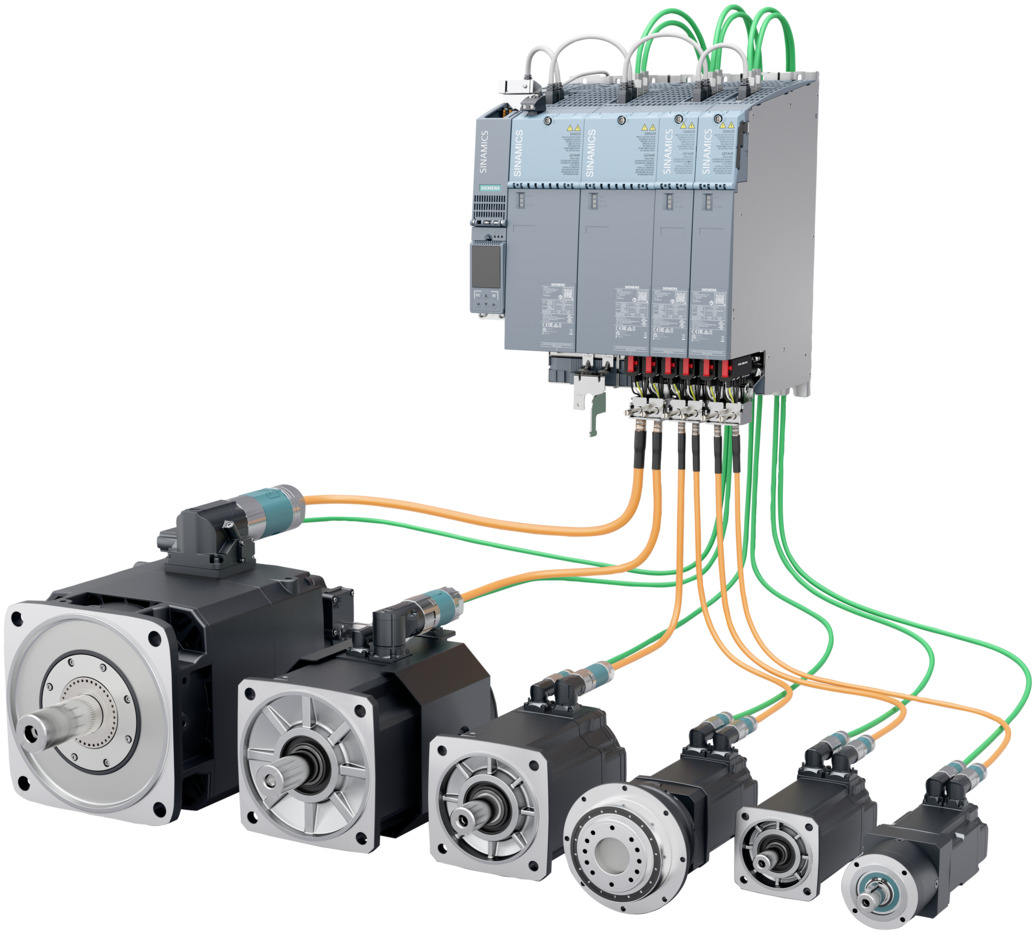
The S220 can also be used to drive 3rd party servo motors, as long as their position feedback system has either drive cliq natively, or is compatible for one of the Siemens Sinamics encoder to drive cliq converter units (SMCs).
Finally, the S220 is a digital native drive. Each CU320-3 has a dedicated ethernet port reserved as a link to edge or cloud data processing. Pair with an edge processor to take advantage of a high speed feed of data from the drive, for predictive maintenance analysis for instance. Or slower speed data analytics in the cloud, for instance with Siemens Insights Hub (Formally called Mindsphere).
1. STO (Safe Torque Off)
2. SS1 (Safe Stop 1)
3. SS2 (Safe Stop 2)
4. SOS (Safe Operating Stop)
5. SBC (Safe Brake Control)
6. SBT (Safe Brake Test)
7. SLS (Safe Limited Speed)
8. SSM (Safe Speed Monitor)
9. SDI (Safe Direction)
10. SLA (Safe Limited Acceleration)
11. SLP (Safe Limited Position)
12. SP (Safe Position)
13. SCA (Safe Cam)
For more info, see Store - Siemens Sinamics S220 Servo Drives
Sinamics S210
The S210 has high speed current and speed loop capability, so is well suited to high dynamic or precise machines like the S220. However it is a ‘block size’ drive, in that each drive must be individually connected to an AC supply, and rectifies the AC supply to its own internal DC bus. This is then chopped back out to the motor to generate the commanded speed and torque.
Each S210 has its own inbuilt braking resistor, but for most it is also possible to connect the internal DC bus of each individual drive together, for them to share any regenerated energy, before it is wasted by the brake resistor. Not as energy efficient as a full regenerating infeed available for the S220, but possibly a good compromise for your machine.
The S210 like the S220 has all safety functions to PLe as per ISO13849-1, both basic and dynamic.
The major difference of the S210 is that one must have a high level controller command the drives. It has no user programmability available onboard for the likes of flying saw applications to reference the example given in the S220 section.
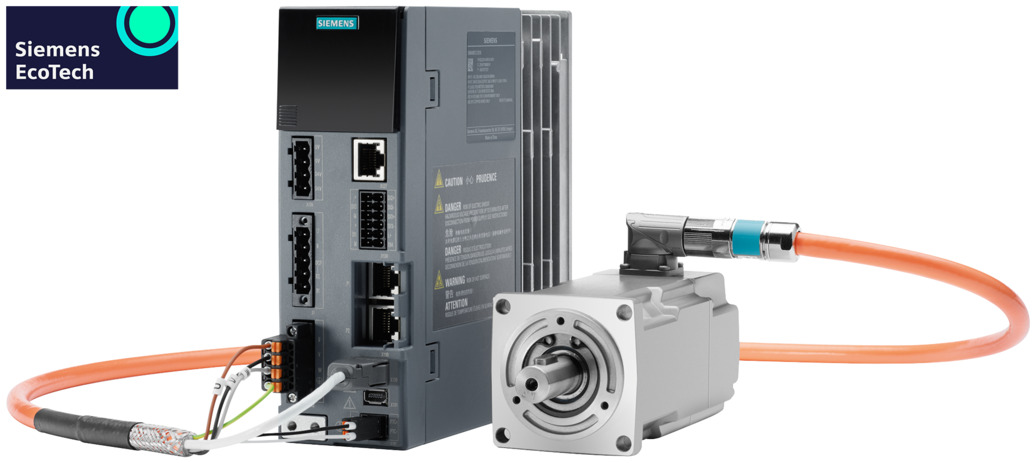
One feature that customers do really like is that the S210 can be paired with 1FK2 and 1FT2 servo motors with ‘one cable connection’. In this configuration, a hybrid cable is used from the drive to the servo motor, taking the power cores and drive cliq cores, plus brake cores if applicable. The saves cable installation time and gives a reduction in space required, particularly advantageous if running through an energy chain / drag chain.
The S210 also supports the EHEDG certified stainless steel motor designed for use in hygiene critical food and pharmaceutical industries, the 1FS2.
The range of servo drive power’s available is:
0.1 to 0.75kW in single phase
0.4 to 7.0kW in three phase version.
For more info, see Store - Siemens Sinamics S210 Servo Drives
Sinamics S200
The Sinamics S200 is the value drive of the Siemens servo drive portfolio. It is the replacement of the Sinamics V90, but comes in several formats. For the New Zealand market who we know are fans of Profinet, we are focussing on the Profinet version with onboard safety. Within our NZ health and safety environment, it would be difficult to justify no safety at all.
The big differences that places the S200 in the value range are:
1. The only safety functions are Safe Torque Off (STO) and Safe Torque Off Time Delay (SS1-t). But both are to ISO13849-1 PLe safety level.
2. NO Profisafe, the above safety functions triggered by safety terminals.
3. Current controller is twice as slow as the S210’s current controller.
4. Doesn’t have Once Cable Connection (which the S210 does have).
5. Has dedicated servo motors (1FL2 range), so 3rd party servo motors are not supported.
The drive does support EPOS, just like the S220, S210 and S120 before them. This permits one to unload the positioning functions off the high level controller in certain circumstances, to run directly on the drive.
The range of servo drive power’s available is:
0.05 to 1.0kW in single phase
0.1 to 7.0kW in three phase version.
The frame sizes of the S200 range are shown in the image below.
So if your application does not require the blistering reaction speeds of the S220 and S210, and doesn’t require Profisafe, then consider the S200 next time you are specifying your drives.
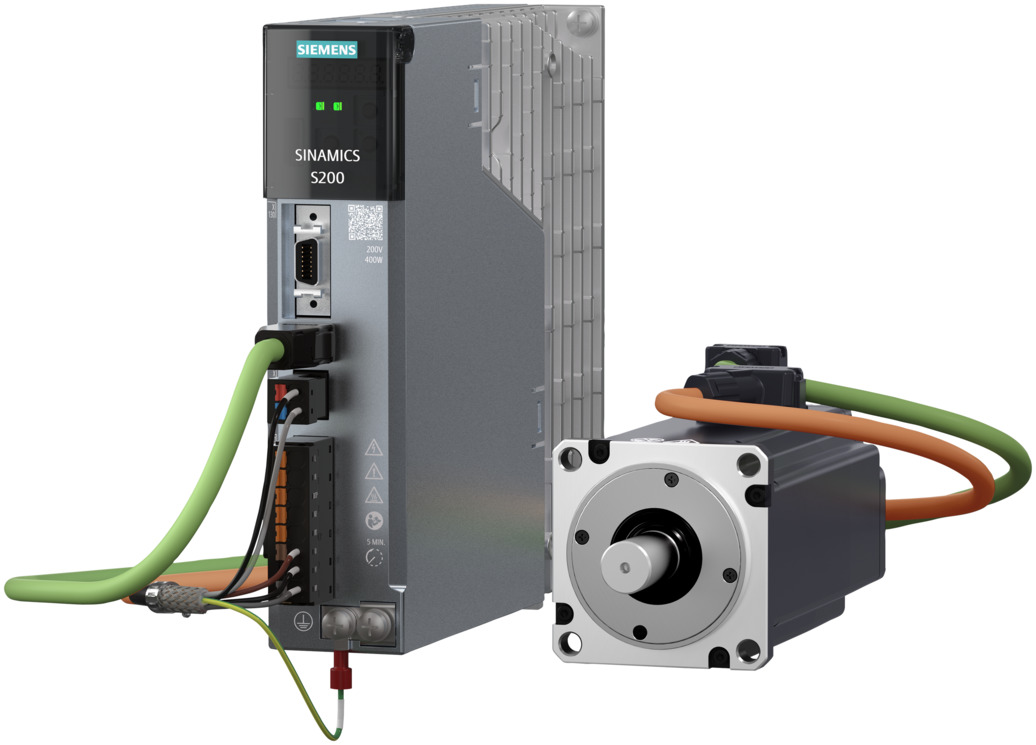
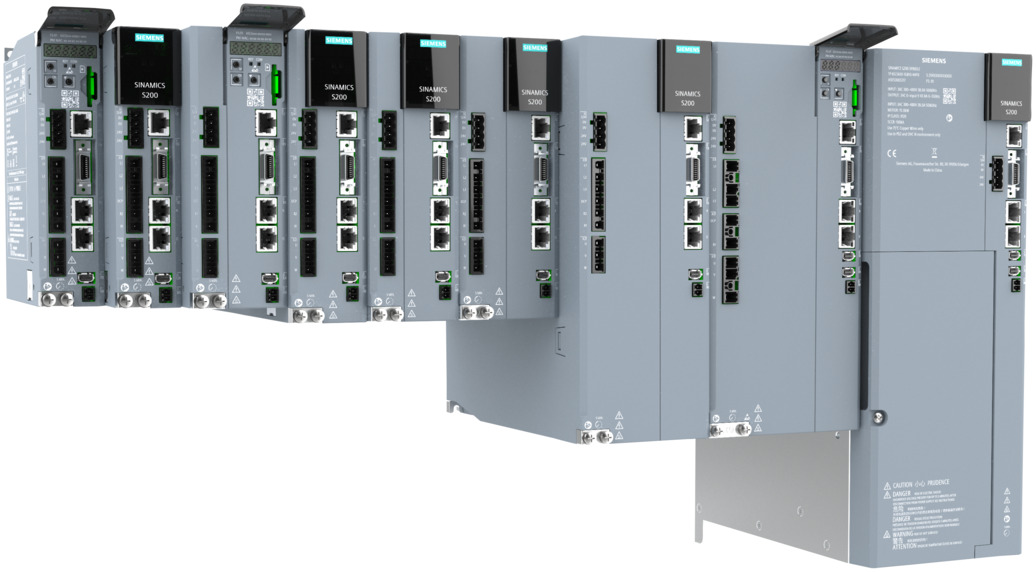
Figure: Sinamics S200 Servo Drive Range of Frame Sizes
Types of Siemens Controllers
Siemens was a pioneer in industrial automation. Siemens has been operating worldwide since 1847 and in New Zealand for over 150 years. (Siemens New Zealand started with telegraph systems).

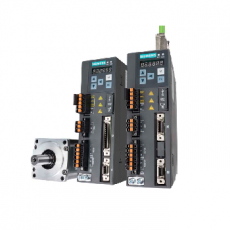
V90
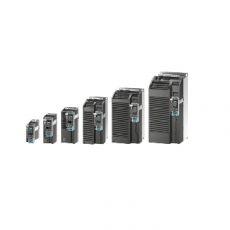
S110
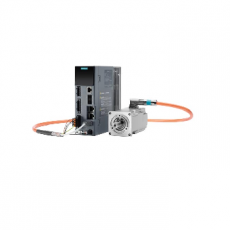
S210
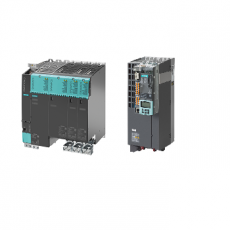
S120