





A servo motor is the precision actuator that keeps the cogs, cams and linear rails moving in industrial machinery. When an application requires accurate positioning, high speed, energy efficiency and repeatable movement, servo motors provide the controlled motion needed to make it happen.
CNC Design supplies Siemens permanent magnet AC servo motors for applications ranging from compact production equipment to large, high-torque machinery. The extensive range covers outputs from 0.05kW to 298kW, with a peak torque of up to 4000 Nm. Options include rotary servo motors, hygienic motors, linear motors and direct-drive torque motors.
Each motor operates within a servo system, usually paired with a Siemens SINAMICS servo drive. Together, the motor, drive, and feedback device control position, speed, and torque with high accuracy. Different power ratings, inertia levels, cooling methods, encoders, and cable arrangements allow you to match each system to the machine's movement, load, and operating environment.
Whether you are comparing servo motors, switching brands, or designing new machinery, talk to CNC Design about a suitable Siemens motor and drive solution.
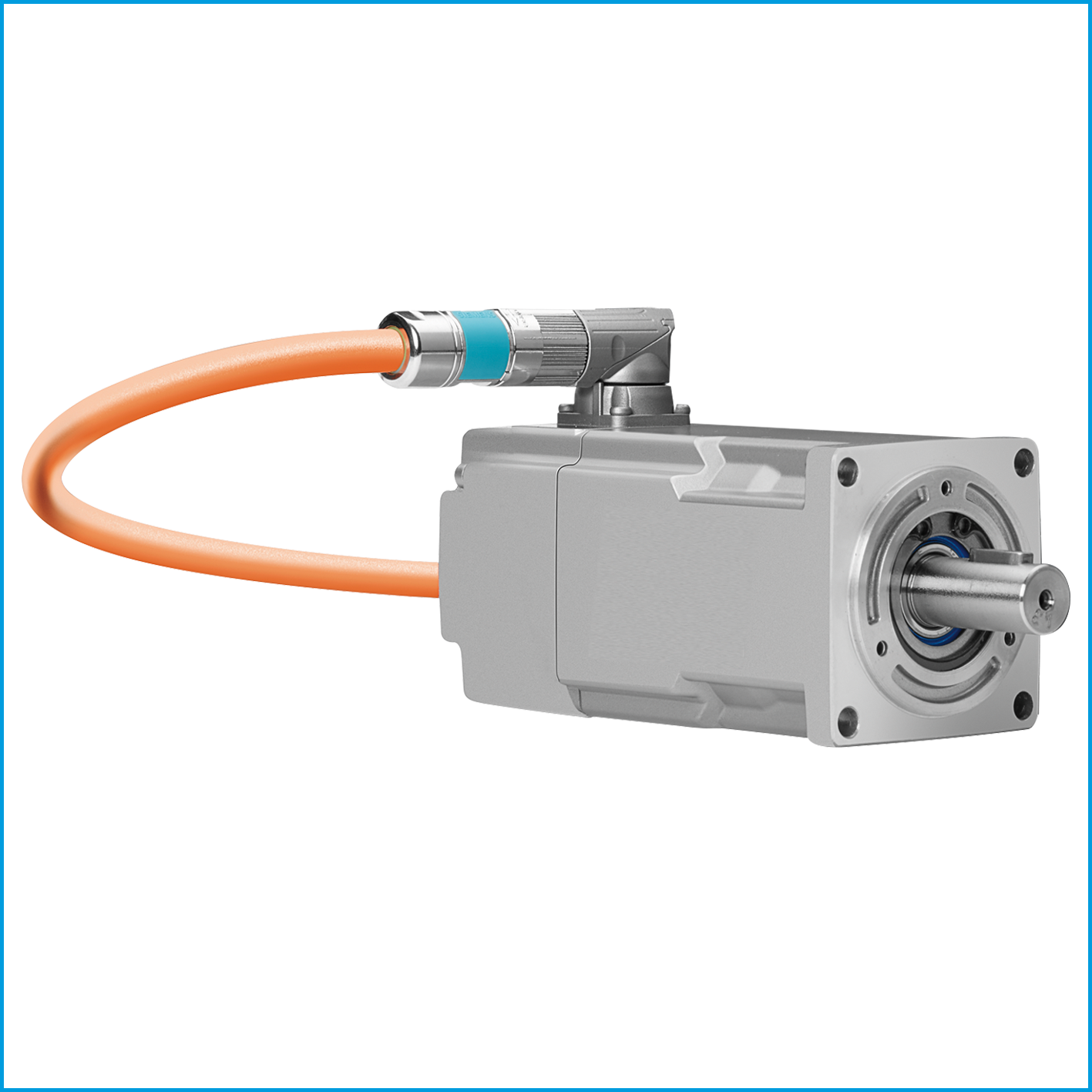
1FK2 & 1FT2 Servo Motors
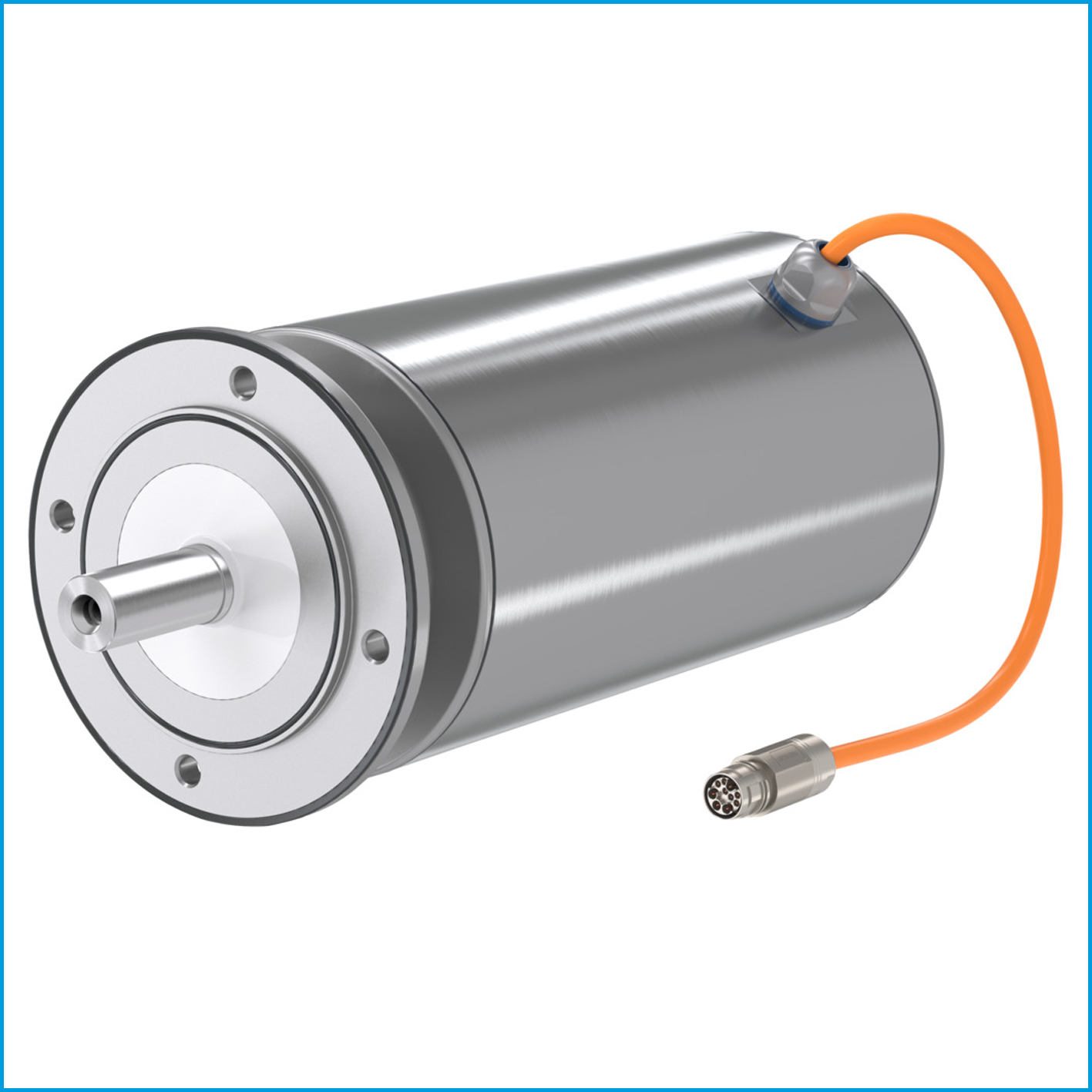
1FS2 Hygienic - EHEDG Certified
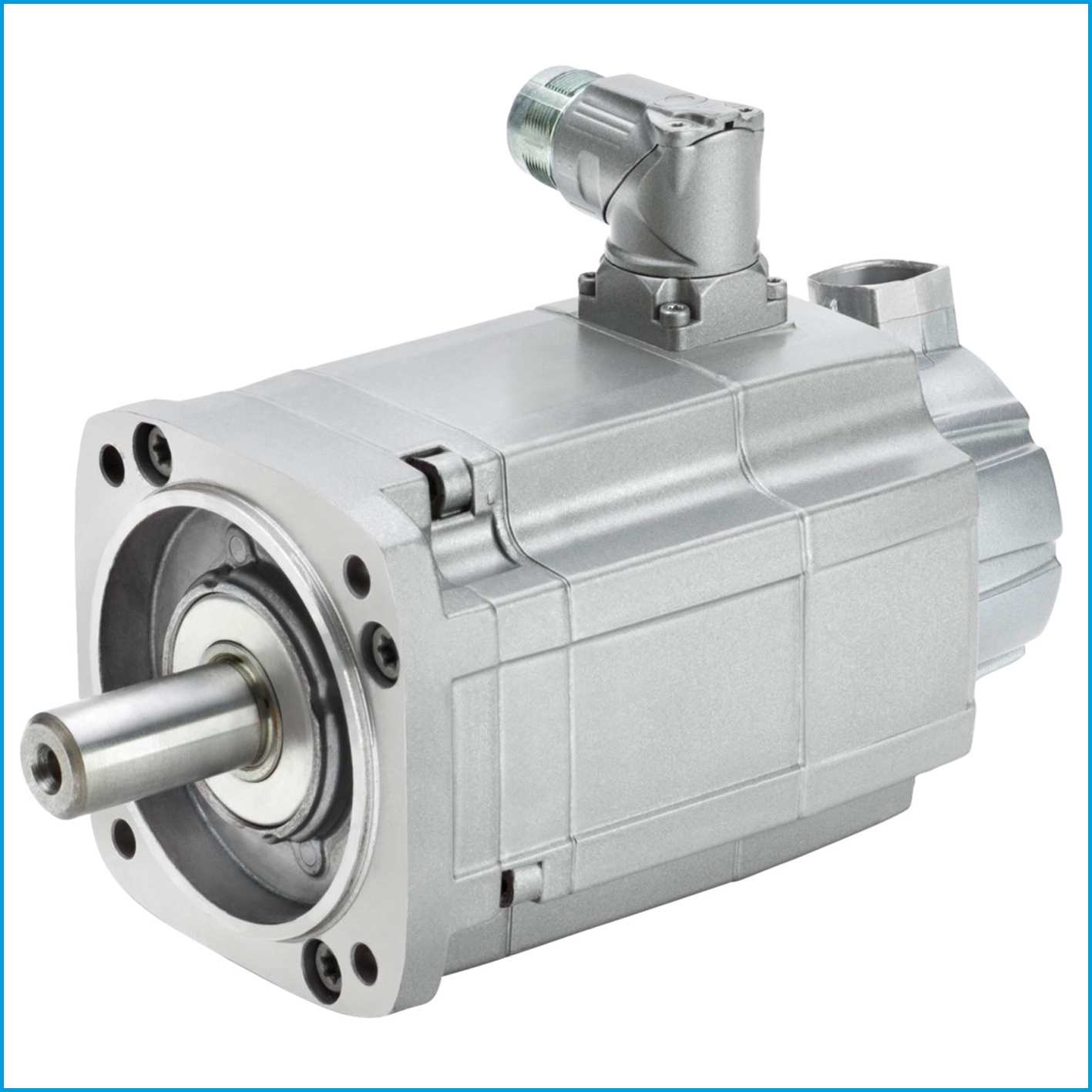
1FK7 & 1FT7 Servo Motors
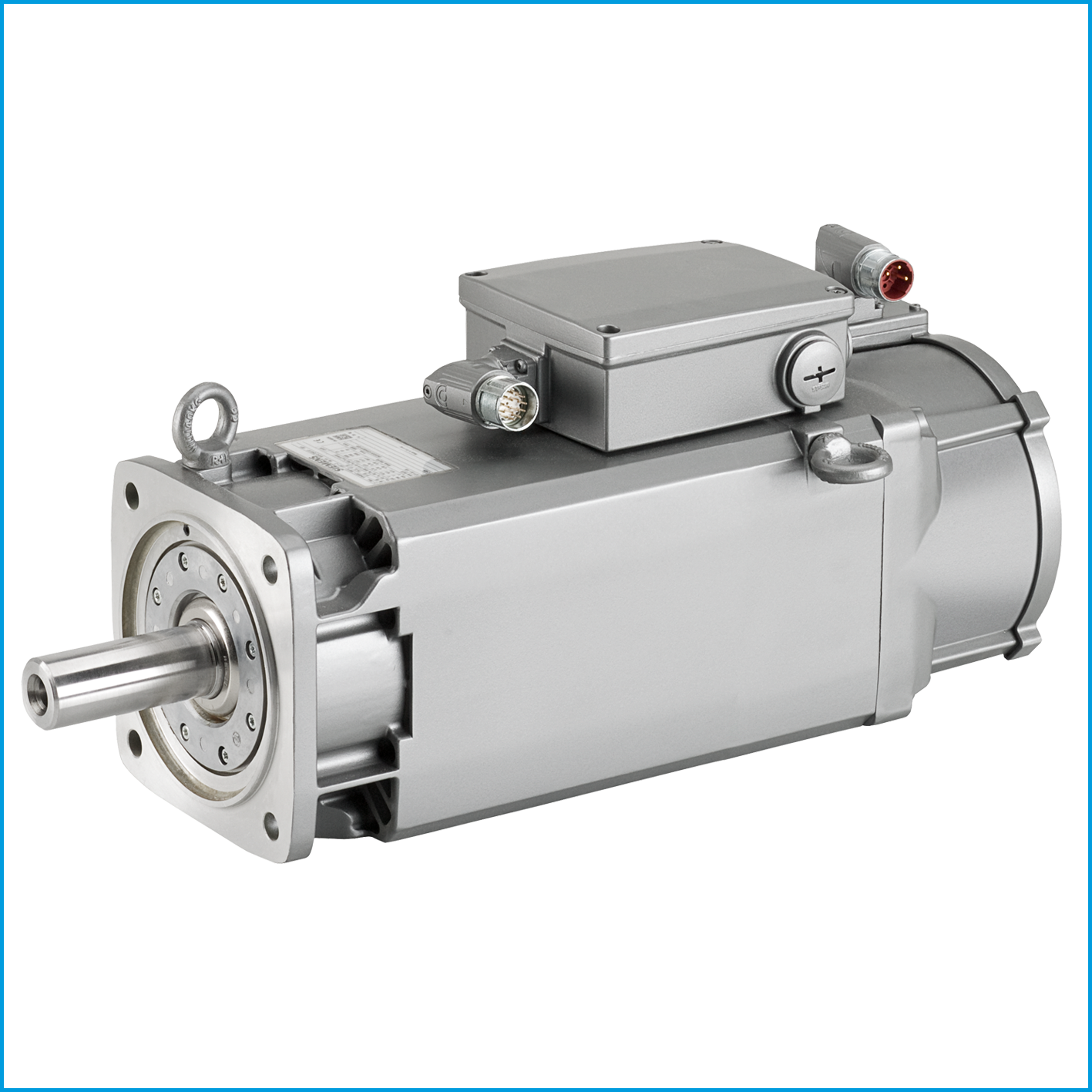
1PH8 Synchronous Servo Motors
How Servo Motors Work
A servo motor operates as part of a closed-loop motion-control system. A controller sends the required movement command to the servo drive, which regulates the electrical power supplied to the motor. An encoder or resolver measures the motor’s actual position and speed, then continuously returns this information to the drive so it can monitor performance throughout every commanded machine movement.
The servo system compares the commanded movement with the feedback received from the motor. If the motor moves too quickly or too slowly, or does not reach the required position, the drive immediately adjusts its output. This continuous correction allows the servo motor to accelerate, decelerate, hold position and control speed or torque with high accuracy and repeatability under changing mechanical load conditions.
Many Siemens servo motors include an electronic nameplate and communicate with the drive through the proven DRIVE-CLiQ feedback network. When connected, the drive identifies the motor and automatically establishes important electrical and control parameters. Selected 1FK2 and 1FT2 models also offer One Cable Connection, combining power, optional brake cores, and position feedback signals in a single cable.
Servo Motor Applications
Servo motors are used wherever industrial machinery requires accurate, repeatable movement rather than simple continuous rotation. They can manage individual axes or coordinate multiple movements across a complete production process.
Applications range from feeding, cutting and indexing to machining, robotic positioning and direct-drive linear motion. The right motor depends on required speed, continuous and peak torque, load inertia, duty cycle, cooling method, feedback system, installation environment, and compatible servo drive.
Siemens offers motor options for compact equipment, high-performance machine tools, hygienic processing, high-torque main drives and specialised OEM machinery.
Production Machinery
Production machinery often uses multiple servo motors to control feeding, cutting, indexing, conveying, sealing and assembly. Each axis can be accurately coordinated with the others, allowing consistent timing even as operating speeds change. In modern factories, Siemens 1FK2 and 1FL2 motors provide options for standard, high-dynamic and precision tasks across compact equipment and complex multi-axis production systems.
Machine Tools
Machine tools depend on smooth, stable motion to maintain positioning accuracy and surface quality. The low torque ripple and high-resolution encoder options available with 1FT2 and 1FT7 servo motors suit demanding cutting and machining axes. Linear and torque motors offer direct-drive alternatives where exceptional speed, precision or rigidity is required.
Hygienic Processing
Food, beverage, and other hygiene-critical facilities require motors that support effective cleaning and minimise potential contamination points. The stainless steel, EHEDG-certified 1FS2 is designed for these environments. Its One Cable Connection reduces cabling around the motor, while compatibility with the SINAMICS S210 creates a fully integrated hygienic servo system.
High-Torque Machinery
Large machines, main drives and heavy industrial processes may require substantially more torque than a compact production servo motor can provide. The permanent magnet 1PH8 range delivers high continuous and peak torque, with forced-air or water-cooled configurations available to support demanding loads, high outputs and extended operating cycles.
High-Speed Linear Motion
Siemens 1FN3 linear motors generate movement directly along an axis without ball screws, belts or other components that convert rotary motion. They suit advanced machine tools and special-purpose production machinery that require rapid acceleration, precise positioning, and less mechanical flexibility than conventional mechanical transmission systems.
Direct-Drive Rotary Motion
Torque motors produce direct rotary motion without gearboxes or couplings, helping to eliminate backlash and reduce mechanical flexibility. Complete 1FW3 motors can be mounted directly to machinery, while 1FW6 rotor and stator components allow OEMs to integrate the motor more deeply into compact, purpose-built machine structures.
Robotics & External Axes
Servo motors can power external robot axes, positioners and other coordinated motion systems. Siemens 1FK7 and 1FT7 motors offer traditional electrical feedback options that can support compatible third-party drives or robot controllers. This flexibility is valuable when adding axes to existing machinery or integrating movement with an industrial robot system.
Replacing Hydraulic Axes
Electric servo systems can replace hydraulic axes previously used for controlled, high-force movements. Removing hydraulic power packs can reduce noise, oil-related maintenance and inefficient energy use. Coupled with robust rotary or linear actuators, servo motors provide a cleaner, more responsive, and more accurately controlled alternative for many industrial machine movements.
Why Choose CNC for Servo Motors?
CNC Design exclusively supplies, integrates, services and supports Siemens servo motors and servo drives in New Zealand. While our products and services are Siemens-specific, we can help businesses looking for any servo motor brand, compare available technologies, or replace an existing motor with a suitable Siemens solution.
As a Certified Siemens Solution Partner, CNC Design combines detailed product knowledge with practical experience in industrial automation, machine tools and motion-control systems. Our team can assess the required speed, torque, inertia, duty cycle, feedback, cooling, connection and mechanical arrangement before recommending an appropriate motor and SINAMICS drive.
We can help determine whether your application needs a conventional rotary servo motor, a hygienic motor, a linear motor, or a direct-drive torque motor. CNC Design also provides integration, commissioning, fault-finding, servicing, and ongoing technical support for Siemens servo motors and servo drives.
Whether you are building new machinery, upgrading an existing axis or replacing another servo motor brand, CNC Design can help you develop a correctly matched Siemens servo system.
FAQs
What is a servo motor?
A servo motor is an electric motor designed to control position, speed and torque accurately. It operates with a servo drive and a feedback device, such as an encoder or resolver. The feedback allows the system to monitor the motor’s movement and make continuous corrections.
What is the difference between a servo motor and a standard electric motor?
A standard electric motor commonly provides continuous rotation. A servo motor is designed for controlled, repeatable movement. Its feedback system lets it accelerate, decelerate, stop at a defined position, hold that position, and respond quickly to changing loads or movement commands.
What components make up a servo system?
A servo system generally includes a servo motor, servo drive, motion controller, and position feedback device. It may also include power and feedback cables, a motor holding brake, a gearbox, a coupling, or a linear actuator. These components must be correctly matched to achieve the required machine movement.
Can Siemens servo motors operate with third-party drives?
Selected Siemens servo motors can operate with compatible third-party drives when configured with traditional electrical encoder or resolver feedback. Motors with DRIVE-CLiQ feedback and electronic nameplate data are designed for use with compatible Siemens drives. CNC Design can assess compatibility before selecting a motor and drive.
How do I choose the right servo motor?
The correct servo motor depends on the required speed, continuous torque, peak torque, load inertia, duty cycle, accuracy, environment and installation space. You must also consider cooling, braking, shaft, encoder, and cable requirements. CNC Design can assess your application and recommend a suitably matched Siemens motor and SINAMICS drive.