




As you likely already know, the pace of change in manufacturing has never been faster than it is today. For you, that cuts both ways. The same technology that’s reshaping factories worldwide is accessible here, and the window to gain a meaningful edge against your competitors is still open.
But it won’t be open forever.
Since 2026 is shaping up to be a pivotal year, we want to equip you to take on the final two quarters with the right approach. We’re seeing trends that were just emerging as conversations twelve months ago become active investment decisions for the more forward-thinking members of the manufacturing or industrial communities here in New Zealand.
You don’t want that window to close on your competitive advantage. So, here is what’s moving forward, which industrial automation solutions deserve attention, and why it all matters now.
1. The smart factory is becoming standard.
These days, having a ‘smart’ factory in more than one sense of the word is a baseline expectation for competitiveness. This is especially true if you supply to larger international chains, where your products must be traceable and your data transparent.
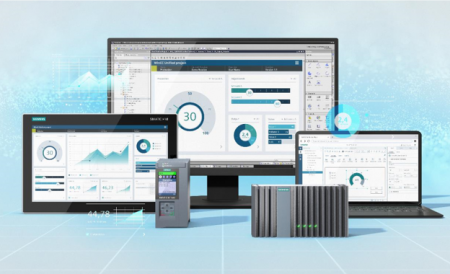
Connectivity is where your attention should be centred. You have a smart factory floor when your machines, sensors, controllers, and enterprise systems all share data in real time. This is what it means to implement a unified architecture.
If you know what is happening in your production environment at every point of the process, then inefficiencies will become visible. This means any decisions you make will be grounded in updated data, not last week’s report.
For example, industrial automation solutions built on platforms like the Siemens TIA Portal are the heart of changes like this. You want a system that provides an integration layer for your new components, immediately giving you visibility across your entire plant.
2. Edge computing is your way forward.
You’ve heard of cloud computing as one of the most well-known industrial automation solutions, but edge computing is an amazing complementary system to cloud. When automated ‘decisions’ happen in a fraction of a second, waiting for data to ping from an external cloud can slow your machinery to a point where it just isn’t viable.
Edge computing is a valuable industrial automation solution because it allows local data processing – either near the machine itself or on it – so that decisions happen at the speed your production line needs.
With edge computing, you have real-time control, less reliance on your network connection, and more visibility for advanced analytics to run directly on the plant floor.
3. Collaborative robotics jumping to the factory floor.
Traditional industrial robots are so powerful and precise, but you’ve seen how they often operate in isolation. They’re caged off from your workers for safety reasons and typically programmed for a single fixed task.
2026 has seen a surge in collaborative robots – a.k.a. cobots – working alongside people, adapting to their environment and capable of redeployment across different tasks. This is a byproduct of the massive changes AI is bringing to almost every industry worldwide.
The implications for you as an NZ owner are significant. Since cobots are increasingly affordable and faster to deploy, the barrier to improving small-batch or mixed-operation floors has been lowered. This is one of the most visible industrial automation solutions this year.
If you have repetitive, physically demanding, or ergonomically risky tasks on your floor, these cobots can assist (depending on the task). This frees your team to focus on higher-value or more delicate work, while improving consistency on the line.
The key to implementing something with such potential to disrupt your floor is to work with an industrial automation specialist who can help reshape your processes so your downtime is minimal and uptake is effective
4. AI-driven process optimisation.
Speaking of artificial intelligence, we are well past the hype stage when it comes to AI in industry. Practical, production-floor AI is what we’re seeing in 2026, and with access to the Siemens line of industrial automation solutions, that's only good news for you.
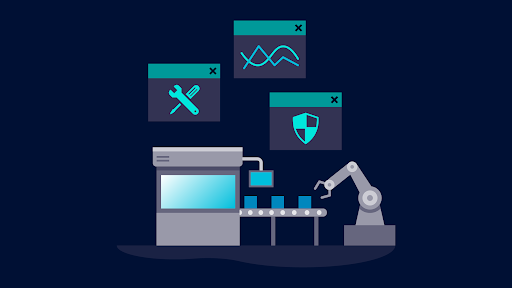
You immediately gain access to systems that monitor process variables in real time, detect patterns that precede faults or quality deviations, and adjust parameters automatically to keep output consistent. In short, that’s fewer rejects, less downtime, and a significant reduction in the cost of quality control.
If you are in the food and beverage sector in particular, it’s important to move quickly, as this sector is seeing a strong uptake in this particular industrial automation solution. Consistency of output and compliance with food safety standards are vital in food and beverage, so floor owners are seeing automated monitoring slide neatly into the process as a natural fit.
In short, a clear picture of industrial automation has emerged in the first half of 2026: maintaining a competitive advantage relies on having visible data, connected components, and intelligent decision-making on your floor.
The businesses pulling ahead are those committed to understanding how these systems can help them move faster, produce better, and be more profitable in the long term.
Partner with a world-class automation specialist.
We are CNC Design, New Zealand’s trusted industrial automation partner. To capitalise on the industrial automation solutions and trends you see here and gain a competitive edge, reach out to discuss your next steps with one of our in-house specialists.