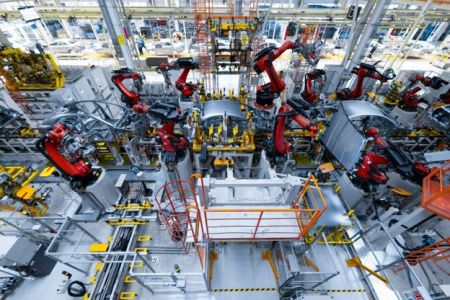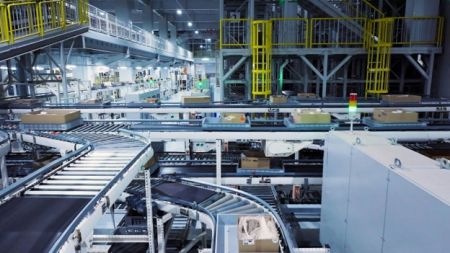





Every day, manufacturing facilities across New Zealand produce hundreds of thousands of products. This is only possible thanks to cyclical iterations, machinery that repeats its designated cycle a thousand times in a single day, all interconnected across the factory floor.
There was a time when this level of efficiency was only possible with human intervention. People talking to people across the floor; operations hampered by human error and strict health and safety requirements. But now, cross-system communication has brought a whole new dimension of speed to the manufacturing, packaging, and creation process for industrial sectors all over the country.
That said, thanks to disparate parts and different systems, this is not always seamless. Disconnected pieces of software house data in different ways. A Totally Integrated Automation (TIA) system can smooth things out. Read on to learn how Totally Integrated Automation parts enhance communications between PLCs, drives, and HMIs for seamless operations.
What is Cross-System Communication in Industry?
Your machinery is in constant, layered communication across the factory floor. The term for this is ‘cross-system communication’, which is the ability of different components, such as PLCs, drives, and HMIs, to share data instantly and accurately.
Traditionally, these systems lived in siloes. A drive might know it’s overheating, but the HMI might not show that specific alarm unless an engineer knows to manually map that data point. This is what essentially amounts to a language barrier.
Data takes too long to travel from the floor to the operator, manual tagging increases the likelihood of human error, and diagnostics take hours of downtime where they would ideally take minutes or seconds. The solution: Totally Integrated Automation (TIA).
What is Totally Integrated Automation?
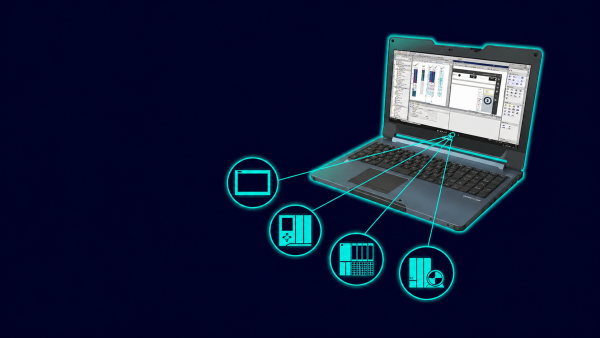
Pioneered by Siemens, Totally Integrated Automation parts the sea of lost data by creating an entire engineering framework in which disparate siloes can be interconnected. TIA systems are ecosystems, with the software providing the medium for a single, unified environment in which every piece of hardware is configured, programmed, and diagnosed from a central hub (the TIA Portal).
You might currently have five different software packages for five different tasks running on your floor, all capturing and communicating data in slightly different ways from system to system. But when you use fully integrated automation components like the Simatic S7-1500 PLCs, Sinamics drives, and Unified Comfort HMI panels for interfacing, your components can (in essence) communicate with each other.
What does that mean for you and your production line?
The Benefits of TIA on Your Production Line
Theoretically, if you brought TIA onto your floor and invested in the required software and hardware, then you want to know that there are real benefits to be enjoyed. Happily, there are.
-
One point of truth.
The most significant benefit you’ll see with Total Integrated Automation is the shared database. Most standard setups can’t handle changes as easily. For example, if you switched the name of a tag or variable in the PLC, you’d usually have to manually update it in the HMI and the drive.
With Total Integrated Automation parts, you change that variable once, it updates everywhere. With a single point of truth like that, you can eliminate the most common cause of communication breakdowns on the factory floor.
-
Seamless integration of total integrated automation parts.
TIA uses vital communication protocols like PROFINET to ensure that high-speed data flows in all directions; horizontally across the floor, vertically to management. Your totally integrated automation parts speak a native language, so there’s no extra programming required for error messages or protocol configuration.
-
Fast commissioning and downtime.
You already know that time is money in the industry. TIA supports virtual commissioning, where you can simulate the entire system’s communication before any hardware is even near the floor. That means almost no downtime for installation; by the time your Totally Integrated Automation system is live, most communication bugs will already have been ironed out in the cloned system.
-
Nailing down your future outlook.
As NZ manufacturers look toward AI and the Internet of Things (IoT), TIA provides the bridge. Because the cross-system communication is already transparent and structured, it is much easier to export that data to the cloud for advanced analytics or predictive maintenance.
To reap these benefits, make sure you’ve got your TIA running optimally, with a Virtual Machine to host the different versions and allow you to push updates live to production with the ability to roll them back should they cause any issues.
The most important thing to do is to inventory the parts you currently have on-site. Total integrated automation parts from the Siemens line are required to run TIA Portal, and choosing the right ones will be vital to the process (especially if you’re aiming for increased efficiency). This is where an automation audit and design specialist can help you.
Implement Total Integrated Automation on your floor seamlessly.
We are CNC Design, operating since 1989. We’ve been helping New Zealand businesses harness the power of Siemens technology for decades, and we know that the real competitive edge comes from having the most intelligent, communicative system.
If you’re investing in workflow automation, either from a software or hardware perspective, get in touch with the team at CNC Design today.