




By now, the question of upgrading to Totally Integrated Automation is less of a “whether” and more of a “when”. It can be a disruptive process for some, but with the gathering speed of industries like manufacturing, food and beverage, and utilities that take on this approach, the results are well worth it.
Getting the timing right matters. Upgrade too early, and you’re spending capital before you need to. Upgrade too late, and you’re nursing ageing systems as you lose ground to competitors.
So, when is best? Here’s how to know.
What is Totally Integrated Automation?
Totally Integrated Automation is a concept developed by Siemens that brings every part of your production environment under one unified architecture, accessible via their proprietary portal. Totally Integrated Automation parts are, in a way, from the same womb; they are built to operate with one another.
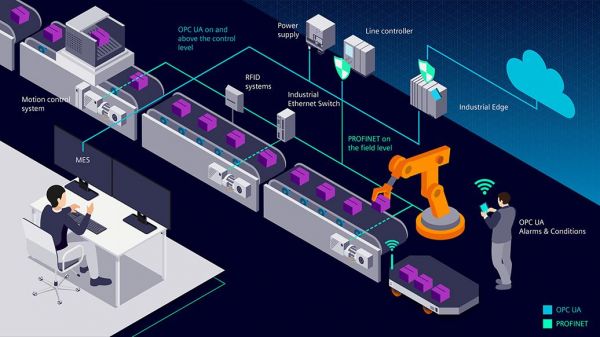
This means that your controllers, drives, operator interfaces, safety systems, and networking all operate from a shared engineering framework with consistent data, tools, and logic. If you have spent years dealing with the friction brought on by mismatching systems – and the resulting headaches – then this is a meaningful shift to make.
How do you know if an upgrade is imminent?
Right now, your systems aren’t speaking the same language.
The symptoms of this issue are incredibly clear once you start looking for them.
Your production floor has likely grown over time. It’s a natural result of organic development in business; a new piece of equipment added here, a new line over here, legacy systems running on that one machine in the corner… It’s a normal part of gaining momentum.
But the problem is, this can leave you with controllers, sensors, and interfaces that were never designed to work together. You have to manually ferry data from system to system, or your operators are maintaining parallel records because your machines don’t communicate automatically. This means your troubleshooting takes longer, downtime is more intense, and different software environments constantly run into friction points.
Installing Totally Integrated Automation parts resolves this at the foundation. Your systems will share a common architecture, so data flows as naturally as water between them. When it comes to your response times and your ability to grow, having this ecosystem in place makes you genuinely competitive in the market.
Faults are more common now than they used to be.
You might have passed a tipping point that most experienced production managers know well, where your legacy systems are throwing more faults than they ever have. This means more attention is paid to malfunctioning parts, climbing maintenance hours, and higher-cost replacements with parts that are more difficult to find.
If your reactive maintenance is starting to consume too much of your team’s time and energy, the economics of that status quo actually don’t add up. Totally Integrated Automation parts are designed to be cross-compatible and last for decades, which means fewer callouts and downtime hours on the books.
Not to mention, you can trace data on the parts themselves to build a predictable maintenance schedule that doesn’t knock your knees out from under you on a random Tuesday.
You’re planning to scale up (or already have).
Expansion is one of the best moments to evaluate your automation architecture. Adding a new line, increasing throughput, or bringing a new product into your facility are all points where the underlying infrastructure comes under scrutiny. If your current setup requires bespoke workarounds every time something changes, then things get more difficult as your system gains complexity.
Many operators and floor managers find that a unified platform built around Totally Integrated Automation is inherently more scalable than discrete parts and systems that have been patchworked together. Because the engineering tools, communication protocols, and hardware families are designed to work together, bringing new equipment or processes into the fold is significantly more straightforward.
You can’t see as much data as you would like to.
Reliable data is the currency of modern industry. No matter what you’re doing or making, staying competitive and finding opportunities to optimise requires full visibility of the data your business is constantly producing. Sure, you can still get somewhere on legacy systems, but you’re working harder than you need to be.
One of the practical benefits that facility managers often cite after moving to Totally Integrated Automation is the visibility it creates. When your systems share a common data layer, energy consumption, output rates, downtime events, and quality metrics are all available in one place and in real time. That visibility supports better all-around decision-making, because you know the why is backed by real on-the-ground numbers.
At the end of the day, an upgrade to TIA is your chance to see real benefits on the floor and against your competitors. We find that most facilities benefit from a staged approach: identifying the highest-risk or highest-impact systems first, upgrading those, and then extending the platform over time as budgets and operational windows allow.
The key is to begin with an honest assessment of where you are, then build a clear picture of what automation means for your business. We aim to be the partner that can help you see this journey clearly.
Upgrade to Totally Integrated Automation with CNC Design.
We are CNC Design, and we have been helping industrial teams bring Totally Integrated Automation parts onto their floors for the past 35+ years. We specialise in industrial automation design, and are motion control experts, offering a wide range of Siemens components and the TIA system on demand.
If you're starting to ask the question, chances are the timing is closer than you think. We're happy to help you work through what that looks like for your facility. Get in touch today.