




You need great gear to keep a manufacturing plant running smoothly, of course, but that’s not all. Any industrial floor thrives on a solid maintenance plan. While Siemens products are built like tanks, even the best industrial hardware in the world needs regular care if you want to get the most out of what you paid for.
New Zealand’s climate can also be surprisingly tough on electrical gear. Depending on where you operate, you might be dealing with anything from fine timber dust to high humidity to the conductive and corrosive coastal air. In Rotorua and other geothermal areas in New Zealand, you may also be exposed to hydrogen sulphide in the air. All of these seem like small issues on the face, but they’re liable to creep into your electronics and cause ongoing headaches. Frustrating, yes. Avoidable? Absolutely.
If you run a line of Siemens products in NZ, the best way to keep them humming for decades is to maintain them well. So, whether you’re running an older line or have the latest Siemens products in your setup, here is a practical guide to maintaining these automation systems for years to come.
1. Manage dust, heat, and vibrations.
There are three key factors to consider when protecting your Siemens products and electronics: dust, heat, and vibration. If the environment inside your electrical enclosures is unstable, your electronics will suffer either immediately or will degrade faster over time.
Excessive heat kills electronic components faster than almost anything else. Because of this, it pays to make sure cabinet cooling fans, air filters, and AC units are checked and cleaned at least once a month.
Industrial dust (especially the fine, metallic, conductive kind) absolutely loves to settle on circuit boards and cause short circuits. A small maintenance point, like regularly checking your cabinet door seals, ensures they’re doing their job: keeping out factory floor grime and preventing fine dust from getting through.
Vibrations are also surprisingly destructive on the factory floor, but only over time. Vibrations from working machinery can slowly back screws out of their terminal blocks, loosening wires. This can cause additional heat on power wires or interrupt sensor signal flow or network communication. When it comes to maintenance, make it a rule to check and tighten critical terminals during scheduled downtime.
2. Get predictive with your maintenance.
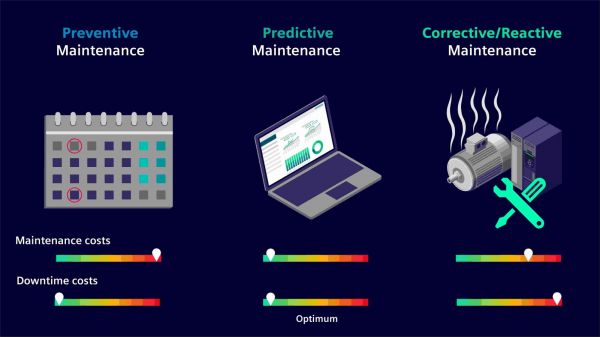
Until recently, much industrial maintenance was reactive rather than proactive. This is because it’s tough to anticipate what a part might need without having a clear understanding of the data at hand. But now, Siemens products and various other industrial automation protocols have made that data clear and actionable. This means you can move to a much smarter, more predictive maintenance model that tackles issues before they arise.
For example, Siemens variable-speed drives constantly monitor their internal stats, such as current draw, voltage, and heat sink temperatures. If you log this data over time, you can spot trouble before it stops the line.
3. Prepare for the worst-case scenario.
If a massive power surge or lightning strike fried your main controller tomorrow, how long would it take your team to get the plant back online?
If you can’t give a clear answer to that question, then there’s a chance that a worst-case scenario could throw your floor into disarray. When we talk about planning, we mean storing your machine’s source code (and all of its edited iterations) somewhere safe and accessible at all times. Even if a tech alters a code block in the early hours of the morning, make sure protocols are in place to ensure those changes are saved and documented in the master file.
It also helps to keep basic spares on hand, like power supplies or common I/O cards, as these are the components most likely to fail and throw your line off.
As you can see, maintaining your Siemens products and automation systems is no different from caring for any other major industrial installation, apart from one clear winner: transparency. Siemens systems capture and report data on their own performance, allowing you to build a tailored maintenance plan that ensures long-term performance.
Need a predictive maintenance plan or a quick repair? We can help.
We are CNC Design. As proud suppliers of Siemens products in NZ, we are always excited to partner with new industrial leaders as they take on their competition. We supply Siemens products, upgrade machine functionality, and provide repairs to minimise downtime.
Tap into the deepest, broadest and most capable automation portfolio in the world for industry, the Siemens line. Get in touch today.