




You’ve likely already heard the terms “VFD” and “servo” thrown around interchangeably, and on a basic level, that is somewhat true. But on your manufacturing floor, there is a massive difference between simply spinning a motor and actually controlling the motion of a particular component.
We often see businesses like yours hit performance ceilings because they try to force a standard variable-speed drive (VFD) to do a job it simply wasn’t designed for. If you’re noticing inconsistent cuts, wasted material, or your precision is drifting, then the solution likely lies in the hardware driving your motors.
So, let’s dive deep. We’re breaking down the servo drive, why it is the undisputed champion of precision manufacturing, and why making the switch is a worthwhile investment in your output quality.
What actually makes a servo drive different?
Before we get into the benefits, we need to clear up the "how." A standard variable speed drive is an "open-loop" system. You tell the drive to run the motor at a certain speed, say 50Hz, and it sends the power. It hopes the motor is spinning at the right speed, but it doesn't actually know for sure. If the load increases or something catches, the motor might slow down, and the VFD will not be as responsive.
On the other hand, a servo drive is a “closed-loop system”. It tracks the motor's response and that of its surrounding components to any given instructions, adjusting itself instantly to hit the perfect stride. But how can it do this?
The encoder. This is a high-resolution sensor mounted on the motor's back. It tells the servo drive exactly where the shaft is at all times. If you tell a servo to move 10.005mm, it moves exactly that far. If it encounters resistance, it draws more current to maintain that position. If it can’t reach the target, it immediately triggers an alarm. This constant feedback loop is the only way that modern precision manufacturing has progressed as far as it has.
How a servo drive will improve your manufacturing:
1. Absolute positioning accuracy.
In many New Zealand industries, near enough just isn't good enough. If you are machining a component for a medical device or an engine part, a deviation of half a millimetre is a one-way trip to the scrap bin.
Because a servo drive uses that high-resolution encoder, it can achieve positioning accuracy that a standard drive simply can’t touch. A high-spec Siemens drive, for example, can break down a single motor rotation into thousandsof increments. This allows for sub-micron precision. In a manufacturing context, this means your first part is identical to your ten-thousandth part. You eliminate the gradual drift that often plagues older, VFD-based systems.
2. Full torque at zero speed.
One of the biggest limitations of a standard variable speed drive is its struggle at low speeds. If you try to run a standard induction motor very slowly under a heavy load, it often stalls or becomes incredibly inefficient. Not ideal.
A servo drive is different. It can provide 100% of its rated torque even when the motor isn't moving. This is critical for applications such as tension control, heavy lifting, and precision clamping. If you need a robotic arm to hold a heavy component perfectly still while a secondary process runs, a servo will not sag or budge.
3. Lightning fast, dynamic responses.
The faster you can move a part from point A to point B, the higher your throughput. However, if you accelerate a standard motor too fast, it will slip or overshoot the target.
Servo drives are designed for high-dynamic transients. They can go from 0 to 3000 RPM and back to 0 in a fraction of a second without losing a single pulse of accuracy. This makes them ideal for pick-and-place robotics or high-speed labelling machines, where the motor needs to start and stop hundreds of times per minute.
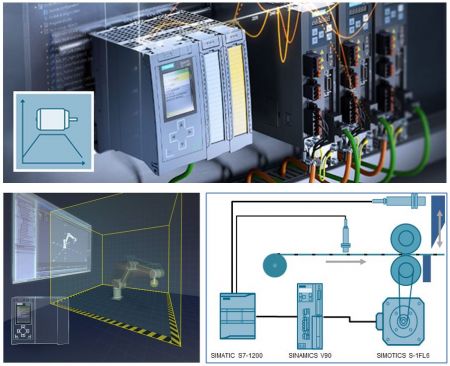
A Siemens drive, in particular, is so well made that, when paired with a servo motor from the same range, it can react to changes on the production line almost instantly. This significantly reduces your cycle times.
4. A drastic reduction in rework.
Waste is the silent killer of profitability in NZ manufacturing. Whether it’s wasted timber in a mill or wasted film in a flexible packaging plant, it adds up.
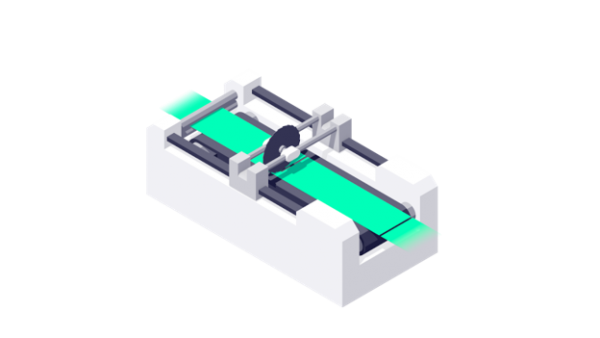
Most of that waste happens during ramping, so if your different motors aren’t perfectly synced, the material can get stretched, bunched, or torn. Because servo drives offer such tight control over acceleration and deceleration, they keep the tension on any material perfectly consistent.
This means you can run your machines closer to their physical limits without worrying about a snap or a jam, resulting in much higher "yield" from your raw materials.
Ultimately, we see upgrading to servo drive technology (particular Siemens drives) as a way to move your business up the value chain. You can take on those high-tolerance jobs your competitors just won’t touch. If you are just spinning a fan in a warehouse, a VFD is fine. But if your business relies on motion precision, the servo drive is the only way forward.
Talk to your local precision manufacturing experts to explore automation.
At CNC Design, we offer high-quality automation design across a variety of industries. Explore our range of Siemens drives, discuss where variable speed drives and servo drives sit on your floor, or let our experts conduct a full audit of your automation to find valuable efficiencies.
Reach out to us to get started today.