




Back in the day, future-proofing your factory equipment meant buying durable, long-lasting items that would go the distance for your factory operations and keeping them oiled up and maintained. These days, that still remains important, but there’s an extra dimension now added. With the rise of the industrial Metaverse, AI-driven decision-making, and supply chains that grow more volatile by the day, future-proofing your automation equipment has moved beyond a hardy-materials question.
Now, it’s about making sure your systems are adaptive and long-lasting enough to evolve with you, rather than holding you back. You might be a plant manager upgrading a legacy line. You might be designing the next generation of industrial machinery yourself. Regardless, your goal right now is likely to create a system that can absorb newer, better technology as it is added to your line (all without requiring a total overhaul).
As designers who work with Siemens automation equipment day in and day out, we hope more industry leaders take a forward-facing view of their hardware and software selections. With that in mind, here is our take on how to future-proof your automation architecture and stay competitive, even as the years roll on.
Automation Takes a New Shape, These Days
The concept of automation equipment for machine builders and industry leaders has been around for quite a while now, though it has taken several shapes. Where automation used to be about doing the same task over and over with fewer errors, true automation equipment today enables adaptive production.
Hardware is governed by software, so as software complexity increases, hardware functionality must scale accordingly. This is what Siemens and its partners (ourselves included) work so hard to anticipate.
Adaptive installations use real-time data and AI-powered responsive decision-making to meet shifting demands. Proprietary black-box software architecture, while widely available, simply can’t get you there. This is why it’s vital to graduate to an ecosystem of interconnected parts, governed by a well-defined and open software architecture that allows you to update any machine on the line at the speed of a software download.
But how? Let’s explore.
Three Vital Ways to Future-Proof Your Automation Equipment
Go modular for scalability.
Equipment is expensive by nature. But the most expensive equipment is the kind you outgrow in three years. This is why we recommend looking for backwards-compatible models when selecting Siemens automation equipment.
For example, the SIMATIC S7-1500 range lets you scale from basic control to high-end motion and safety without ever changing your engineering environment. Modular I/O systems like the ET 200SP let you add or swap modules as your production needs grow, so your base infrastructure is always intact even as your capabilities expand.
Embrace the clone.
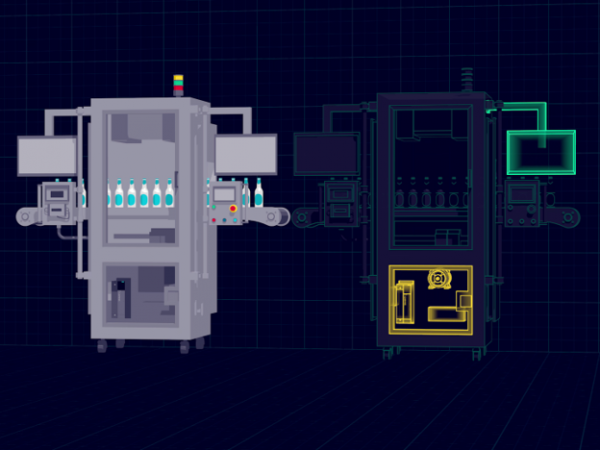
We see one of the most powerful ways of future-proofing your industrial automation equipment is to build the machine twice. Once physically, once digitally. When it comes to automation equipment for builders in particular, this is important, as a digital clone or ‘twin’ can help you validate new functions, test software updates, and even train operators virtually before they set foot on the floor.
We’ve seen this approach significantly reduce commissioning time, and it also ensures that any future upgrades you need to roll out are testable without causing downtime.
Use Software-Defined Automation (SDx).
We are entering an era in which the value of automation equipment for machine builders is dictated by the software it runs. By adopting Software-Defined Automation (SDx), you can decouple your control logic from the underlying hardware.
For example, if a specific PLC becomes unavailable or you need to install a newer, more powerful processor, your code remains portable.
Siemens is the best system for these future-proofed automation equipment upgrades because they build with the future in mind. They help you to adapt the three principles above, moving you away from reactive fixes, siloed components, and manual on-site intervention. Instead, you get one environment for everything, remote updates, and predictive maintenance that handily speeds up your troubleshooting.
What You Need From Your Equipment
Whether it’s Siemens automation equipment for machine builders or a TIA Portal integration for the food and beverage industry, you need your equipment to deliver on what you invest (and then some). While we champion the Siemens line as the ultimate choice, your exploration of the options is your own. Regardless, to be ready for the future, your automation equipment must demonstrate:
- Open standards that support the universal language your machinery will use to communicate, throw errors, and generally operate. Black boxes are unwelcome.
- AI readiness, which comes from the right amount of processing power to run AI-based quality inspections or local energy-optimisation algorithms.
- Cybersecurity-minded designs, as new digital threats are always emerging.
As you can see, future-proofing has received an upgrade. We’ve seen so many ways that manufacturing and industry can evolve, so now it’s about being ready for any possible future, rather than the simple passage of time.
While you can’t anticipate every single change, you can invest in automation equipment for machine builders that gives you enough flexibility to respond to whatever is coming.
Invest in resilience, invest in your future; chat to CNC Design.
Benefit from our 35 years of helping New Zealand industries navigate major technological shifts. Whether you’re a machine builder or an end user, our expertise ensures your next investment is built on a foundation of long-term resilience.
Get in touch with our team today to discuss your automation equipment design and installation.