Electric motors are designed to be some of the most robust moving elements in your entire production line. They run either frequently or continuously, often under heavy loads, essentially redefining the word ‘workhorse’ for every minute they operate. Replacing or rewinding these essential components is, no surprise, quite expensive. Not to mention, the downtime from that replacement affects potential profits.
It follows that increasing the lifespan of your motors is an essential part of creating a cost-effective operation; but how does one do that?
In short:Variable speed drives. These are some of the best tools for extending motor lifespan. Let’s explore how they work and why they make such a difference.
Direct-On-Line Starting Creates Problems
When you start a motor direct-on-line (i.e., connected straight to the mains supply), it can draw an inrush current that's five to eight times its rated full-load current. While the spike might only last a few seconds, the mechanical shock it delivers to the windings (not to mention the thermal stress accumulation) compounds over time.
In any application where your motors start and stop often, that repeated cycle creates built-up stress that will eventually take the motor offline. In fact, this is one of the clearest observable causes for insulation degradation and premature bearing failure on the line.
On the mechanical side, direct-on-line installation creates more problems. For one thing, this approach applies full torque immediately, creating a jolt that stresses all the mechanics within. Again and again, that shock creates disruptive jolts, eventually wearing down the motors until they have to be replaced.
If motors were brought up to speed gradually and that on/off shock was well-managed, you would enjoy a motor with a much longer lifespan. Enter: variable speed drives.
How Variable Speed Drives Keep Motors Healthier
A variable speed drive lives upstream from your motors, carefully controlling the frequency and voltage they receive each time they start. That defines the energy they receive at each start, ensuring speed and torque stay within healthy ranges for the motor.
The VSD drive gradually brings the motor up to speed over a controlled acceleration period, so inrush current and mechanical start shock are no longer factors. The combined lack of these two damaging influences has some really positive impacts on your motor lifespan:
- Reduced thermal stress. Lower starting current means less heat generated in the windings during each start. As a rough rule, every 10°C reduction in winding temperature approximately doubles the insulation life.
- Reduced mechanical stress. Controlled acceleration eliminates the torque spike that causes mechanical shock.
- Reduced operating current at partial load. Many motors spend a significant portion of their operating time running below full load. A variable speed drive adjusts the motor's speed to match the actual demand, dramatically lowering current draw and thermal loading.
- Better thermal management overall. You can configure VSDs with thermal monitoring to track winding temperature and trigger alerts before things get dangerously hot.
What Makes Siemens Drives So Good?
The quality of your servo drive or variable speed drive determines how well you protect your downstream motors. Therefore, it’s important to be discerning. The Siemens drive range is the best choice, but let’s unpack why.
Your variable speed drives will output an electrical signal to the downstream motors. The quality of that output is vital to maintaining the health of said motors. Poor waveforms create harmonics and voltage spikes that stress the winding insulation, which can accelerate how quickly motors degrade over time. In other words, bad variable speed drives can actually do more harm than good by accelerating the very effect they are designed to prevent.
A Siemens drive, however, is different. These drives use advanced pulse-width modulation techniques to produce a clean, motor-friendly output waveform. When you work with automation designers like our team, we carefully pair the Siemens drive models with the right output filters to minimise additional electrical stress on the motor.
In short, the Siemens drive is designed with all eventualities in mind, not just to tick the VSD box on the line.
If you run a production facility with a significant motor population, the first step is to work with an automation team to do a variable speed drive audit. This lets us identify which motors are best for drive installation based on their duty cycle, load characteristics, and current energy consumption.
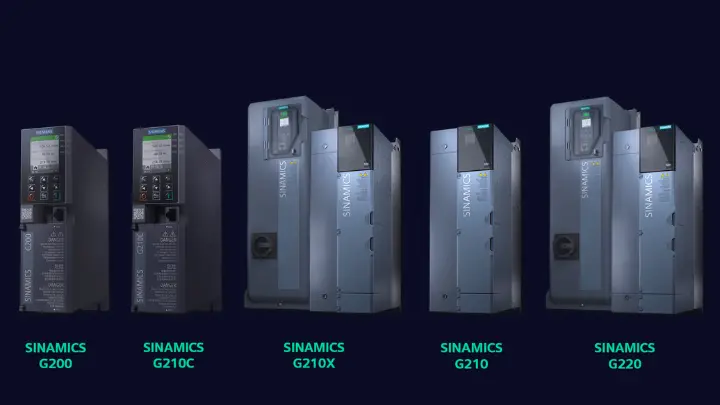
We isolate motors that start most frequently, have the highest partial-load operating time, or carry the most expensive consequences if they fail. Then, we work with the full Siemens drive portfolio (from the Sinamics G range for standard pump and fan applications through to high-performance servo drive solutions for precision motion control) to find the best solution for your line.
Introduce variable speed drives on your line to preserve motor health.
Curious about the potential for servo drives or variable speed drives in your production facility? Getting the design and integration right is key, and we are here to help.
We are CNC Design, New Zealand’s trusted automation specialists. As a certified Siemens Solution Partner with over 37 years of experience in NZ manufacturing and food and beverage environments, our team can assess your motor population and design an appropriate solution to extend its lifespan.Get in touch today.